Ask ten cigar smokers which country makes the best cigars and you will get ten different answers, most of them defended with real conviction. We hear this question constantly, and the honest answer we give every time is that no single country makes “the best” cigars. Cuba, the Dominican Republic, Nicaragua, and Honduras each grow tobacco with its own personality, shaped by different soil, climate, and blending traditions, and what counts as best depends entirely on what you are looking for in a smoke. What we can do is show you the data, because rather than settle this with opinion alone, we pulled 22 years of Cigar Aficionado’s Cigar of the Year award, the closest thing this industry has to an annual, blind-tasted verdict on the single best cigar released. The results still surprise most of the customers we talk to.
22 Years of Cigar of the Year Winners, By Country
| Country | Cigar of the Year Wins (2004-2025) | Share of Total | Signature Regions |
|---|---|---|---|
| Nicaragua | 11 | 50% | Estelí, Jalapa, Condega |
| Dominican Republic | 6 | 27% | Santiago, Cibao Valley |
| Cuba | 4 | 18% | Vuelta Abajo, Pinar del Río |
| Honduras | 1 | 5% | Jamastrán, Copán |
Based on Cigar Aficionado’s Cigar of the Year picks from 2004, the first year the award was given, through 2025. Padrón alone accounts for four of Nicaragua’s eleven wins, more than any other single brand from any country.
We were not surprised that Nicaragua led, but we did not expect it to have won outright half of the time over more than two decades. That is a sharp contrast to the reputation Cuba still carries in most people’s minds as the default answer to “best cigars in the world.” We think the data tells a more honest story, and in our experience each country earns its reputation for genuinely different reasons.
Cuba: The Legacy
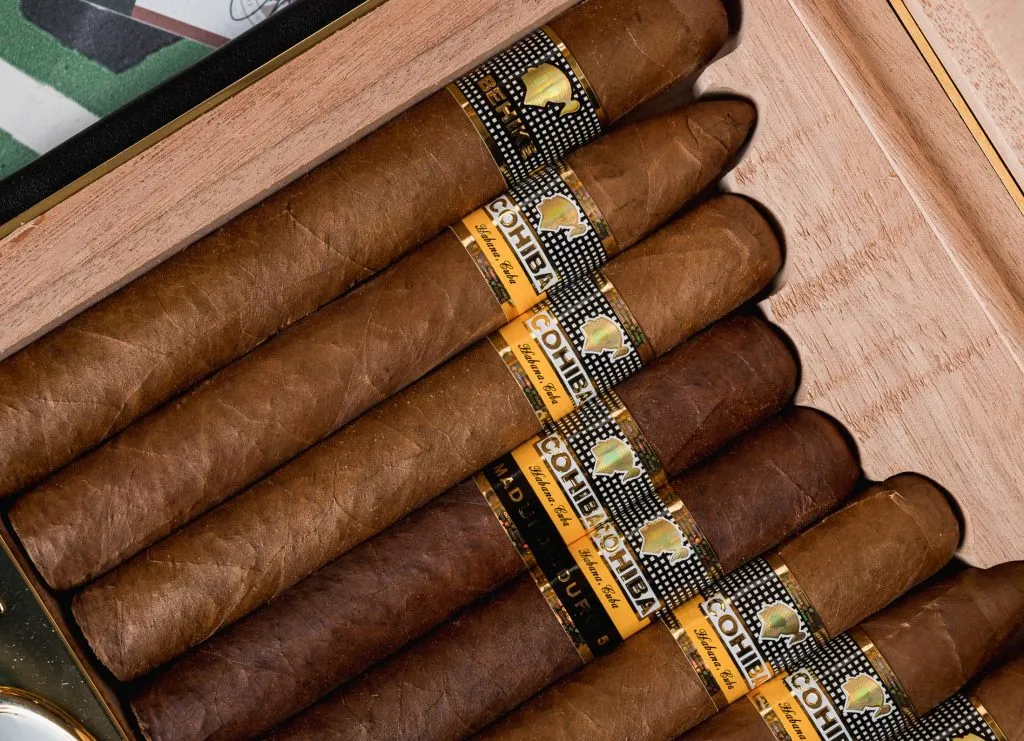
No country’s name is more tied to cigars than Cuba, and we understand why. The Vuelta Abajo region in Pinar del Río has some of the most naturally suited tobacco-growing conditions on earth: red clay soil, consistent humidity, and a microclimate that Habanos has never fully replicated anywhere else it has tried. We have watched brands like Cohiba, Montecristo, and Partagás define what most smokers still picture when they imagine a premium cigar.
But Cuba’s four Cigar of the Year wins over 22 years, the most recent in 2022, also reflect something we see firsthand and talk about openly with customers: inconsistency. Production bottlenecks, embargoed export routes, and batch-to-batch variation mean a box of Habanos can be extraordinary or disappointing, sometimes within the same shipment. When a Cuban cigar hits, in our experience, few things compare. When it does not, the gap is obvious.
We think Cuba’s reputation was earned decades before Nicaragua’s rise, and it is not undeserved; the best Cuban cigars are still some of the most complex smokes we carry. What we tell customers honestly is to expect more variance box to box than they will find from a well-run Nicaraguan or Dominican factory.
Dominican Republic: The Refined Powerhouse
The Dominican Republic cigars has spent decades building a reputation for consistency that we do not think Cuba has ever matched. Santiago and the surrounding Cibao Valley host some of the most technically disciplined cigar factories we know of, and brands like Arturo Fuente, Davidoff, and E.P. Carrillo have made construction quality practically a national trademark. Six Cigar of the Year titles across the period, including three in the last six years alone, tell us this is a country that has quietly become as competitive as anywhere on the list.
Dominican tobacco itself tends toward smoother, more balanced profiles, though the country grows enough variety, Piloto Cubano, Olor, and imported Connecticut and Nicaraguan leaf blended in, that we would push back on the old assumption that “Dominican” automatically means mild.
If we had to recommend one country to someone who wants a cigar that performs the same way every single time, it would be the Dominican Republic. We can taste Fuente’s factory discipline in particular: a cigar rolled there in January smokes the same as one rolled in October.
Nicaragua: The New Benchmark
The rise of Nicaraguan cigars is not a recent fluke in our eyes. Padrón, Oliva, and My Father have spent over two decades proving to us that Estelí, Jalapa, and Condega tobacco can produce cigars with real depth and complexity, not just raw power. Volcanic soil across the growing regions gives Nicaraguan leaf a distinct minerality we notice again and again, and the country’s willingness to blend tobacco from multiple micro-regions into a single cigar, something Cuba’s puro tradition does not allow, gives Nicaraguan blenders more room to build complexity.
Eleven Cigar of the Year wins in 22 years is not a coincidence to us, it reflects a genuine concentration of talent: the Garcia family (My Father), the Padrón family, and the Oliva family have all built factories in the same country and, in some cases, within a few miles of each other. We have not seen that density of expertise replicated anywhere else.
We do not think Nicaragua’s dominance in these rankings is hype. Cigars like the Oliva Serie V Melanio Torpedo deliver a level of construction and flavor layering that we used to associate exclusively with Cuba, at a fraction of the inconsistency risk.
Honduras: The Underrated Value
Honduras rarely gets mentioned in the same breath as its three neighbors, and in our view that is more about marketing than quality. The Jamastrán Valley and Copán regions produce well-balanced, medium-to-full tobacco, and factories run by Rocky Patel, Camacho, and Alec Bradley have built loyal followings without needing Cuban mystique or Nicaraguan hype to sell cigars. Alec Bradley’s 2011 Cigar of the Year win with the Prensado Churchill is proof, in our reading of the data, that the country can compete for the top spot when a factory gets everything right.
We point smokers toward Honduras when they want Nicaraguan-adjacent boldness without the premium price tag that comes with a big-name Nicaraguan factory. It is not currently part of our own catalog, but we think it is worth knowing about if you shop elsewhere too.
So, Where Are the Best Cigars Made?
If you want the single most defensible, data-backed answer we can give: Nicaragua, by a wide margin, based on over two decades of blind competitive tastings. If you want the most historically important answer: Cuba, whose legacy shaped the entire category even if its consistency has not kept pace. If you want the safest bet for a cigar that performs exactly the same every time: the Dominican Republic. And if you want value that outperforms its reputation: Honduras.
But the honest answer, the one we always land on when a customer pushes us to just pick one, is that “best” depends on what you are optimizing for: raw complexity, historical prestige, reliability, or price. We genuinely believe all four countries are currently making some of the best cigars ever produced, just not the same kind of best.
Frequently Asked Questions
Are Cuban cigars really the best?
Cuban cigars carry the strongest historical reputation and can be extraordinary, but the data on blind competitive tastings shows Cuba has won fewer Cigar of the Year titles than Nicaragua over the past two decades, which lines up with what we see firsthand: real inconsistency box to box.
Why has Nicaragua become so dominant in cigar rankings?
A concentration of top-tier factories, including Padrón, Oliva, and My Father, combined with volcanic soil across Estelí, Jalapa, and Condega, has let Nicaraguan blenders produce complex, full-flavored cigars with high consistency, and unlike Cuba’s puro tradition, Nicaraguan blenders can mix tobacco from different micro-regions in a single cigar.
Which country makes the most consistent cigars?
In our experience, the Dominican Republic is the most consistent, with disciplined factories in Santiago producing cigars that perform reliably from box to box.
Is Honduras underrated for cigars?
We think so. Honduras has produced comparatively few headline-grabbing wins, but its Jamastrán Valley and Copán tobacco regularly produces well-balanced, medium-to-full cigars, and the Alec Bradley Prensado Churchill proved the country can win the top award when a factory executes well.