Someone hands you a cigar at the end of a long dinner. No band, no box, just a well-rolled stick and a knowing smile. You light it, take the first draw, and something clicks. Cedar, a touch of cream, mild earth. You assume it is Cuban. It is not. It is Dominican, and that moment of confusion is more common than most aficionados would care to admit. The gap between the myth of Cuban cigars and the reality of what the Dominican Republic produces today is one of the most instructive things you can discover as a cigar smoker. This guide breaks it down honestly.
Cuban vs Dominican Cigars at a Glance
| Spec | Cuban Cigars | Dominican Cigars |
|---|---|---|
| Tobacco origin | 100% Cuban leaf (puro) | Dominican leaf, often blended with Nicaragua, Ecuador or Cameroon |
| Flavor profile | Earthy, cedar, creaminess, floral notes | Broader range: nuts, coffee, cocoa, leather, spice |
| Body | Typically medium, refined | Mild to full depending on blend |
| Construction consistency | Variable, quality control issues reported | High, factory standards tightly controlled |
| Availability in the US | Prohibited by embargo | Fully legal and widely available |
| Price range | $40+ per stick (grey market) | $8 to $50+ depending on line |
| World production rank | Leading heritage producer | No. 1 premium cigar producer globally |
A Tale of Two Tobacco Traditions
The debate between Cuban and Dominican cigars is not simply about which tastes better. It is a conversation about terroir, history, political circumstance, and what premium cigar making looks like today versus what it looked like seventy years ago. Both countries produce exceptional cigars. But they do so in very different ways, from very different starting points, and with very different results depending on what you are looking for in a smoke.
Cuba built the cigar world. The Vuelta Abajo region of Pinar del Rio remains one of the most celebrated tobacco-growing areas on the planet, and the Cuban cigar brands born there, Cohiba, Montecristo, Partagas, Romeo y Julieta, carry a weight of history that no other country can replicate. The Dominican Republic, on the other hand, built its cigar industry largely from what Cuba lost. When the Cuban Revolution of 1959 forced master rollers and brand owners to flee, many landed in Santiago de los Caballeros. They brought their seeds, their knowledge, and their standards. What grew from that transplant is today the largest premium handmade cigar industry in the world.
Flavor Profiles: What Each Country Actually Tastes Like
Cuban cigars
Cuban tobacco, grown in the rich red soil of Vuelta Abajo, produces a flavor profile that is difficult to replicate anywhere else. At their best, Cuban cigars deliver a distinctive creaminess alongside notes of cedar, earth, and mild spice. The flavor tends to be cohesive from start to finish, without sharp transitions, and the medium body makes them approachable for a wide range of smokers. Floral and herbaceous notes appear in some lines, particularly in lighter vitolas, and the finish tends to be savory and long.
The complexity that comes from a well-aged, well-constructed Cuban is genuinely unique. The tobacco itself carries a character that decades of selective cultivation have refined. A Cuban puro, made entirely from leaf grown in that soil, offers something no Dominican puro can fully duplicate, regardless of how skilled the blender or roller.
Dominican cigars
Dominican cigars earn their reputation through range and consistency rather than a single signature profile. The island’s northern growing regions around Santiago and La Vega produce leaf that tends toward mild creaminess and subtle sweetness on its own. What makes Dominican cigars stand out is how blenders layer that base with tobaccos from Nicaragua, Ecuador, Honduras, or Cameroon to build depth that a puro from any single country would struggle to match.
The result is a category with extraordinary variety. A Dominican cigar can range from the silky Connecticut-wrapped mildness of an Ashton Classic to the full-bodied, pepper-forward intensity of a Davidoff Nicaragua. Notes of toasted nuts, cocoa, coffee, leather, and dried fruit appear across different lines. That flexibility is both the Dominican Republic’s greatest strength and what makes it genuinely difficult to characterize in a single sentence.
The Cohiba Question: Cuban vs Dominican
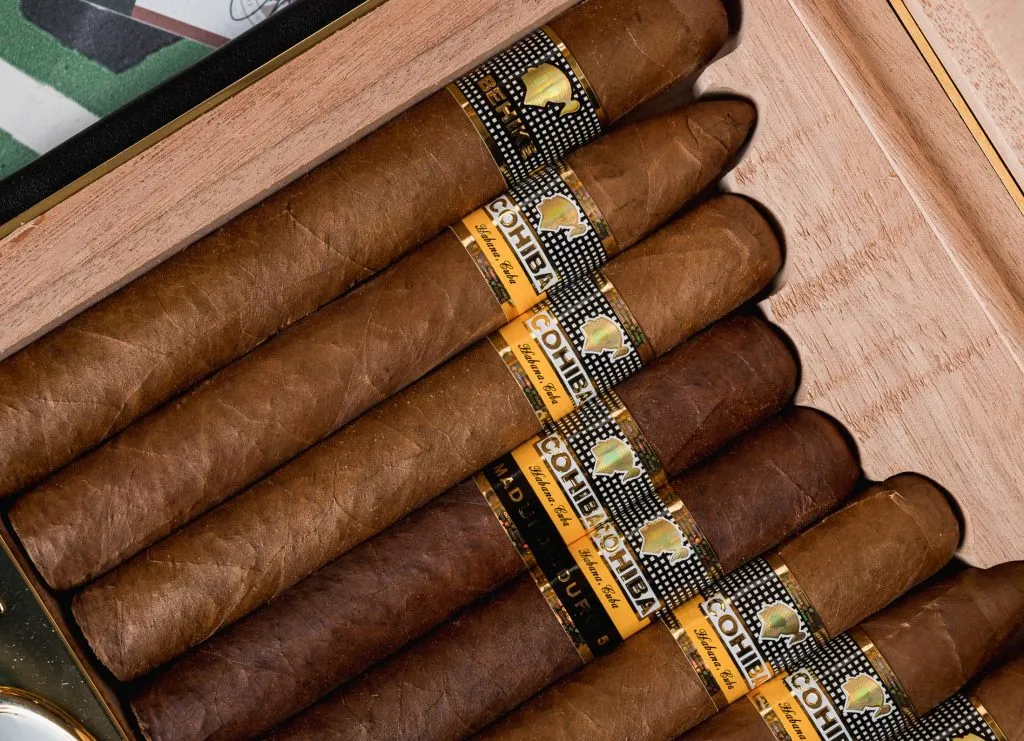
No comparison between these two countries is complete without addressing Cohiba, the brand that sits at the center of the Cuban-Dominican debate more than any other. The situation is confusing to many smokers because two entirely separate companies produce cigars under that name.
The Cuban Cohiba, produced by Habanos S.A. in Havana, is widely considered the flagship of the Cuban cigar world. It uses tobacco from the best vegas of Vuelta Abajo, including the exclusive El Laguito factory. The Cuban Cohiba Robusto, at 4.875 x 50, delivers a medium-bodied smoke with notable creaminess, sweetness, and a complexity that builds gradually. When the cigar is properly aged and construction is tight, it is one of the most refined smoking experiences available. The caveat: Cuban Cohibas cannot be legally imported into the United States, they are expensive on the grey market, and construction quality is inconsistent enough that a significant proportion of boxes will contain disappointing cigars.
The Dominican Cohiba, produced by General Cigar and sold legally throughout the US, is a different product entirely. The red-dot Robusto carries a Cameroon wrapper over Dominican filler and delivers solid pepper, leather, and sweetness with excellent draw consistency. At around $10 per stick, the value proposition is hard to argue with. Are cohibas Cuban? The Cuban ones are. The ones you find in any US cigar shop are Dominican, and they are a genuinely good cigar in their own right, not a substitute for the Cuban but a different product with its own merits.
Construction and Consistency: Where the Real Gap Lies
This is the area where the comparison becomes most practical for the everyday smoker. Cuban cigars are handmade by torcedores in state-run factories, a system that does not incentivize individual excellence in the same way a competitive private market does. The result is well-documented: draw issues, uneven burns, and flavor inconsistency within a single box are common enough complaints that experienced smokers factor them in as a cost of doing business with Cubans. A box of 25 may yield five outstanding cigars, ten solid ones, and the rest ranging from mediocre to genuinely unsmokeable.
Dominican factories, led by operations like Tabacalera A. Fuente, Davidoff’s La Canela facility, and La Aurora, operate under strict quality control protocols. Each cigar is checked for draw, weight, and construction before it leaves the factory. The standard deviation between the best and worst stick in a box of Dominican cigars is dramatically lower than in an equivalent Cuban box. For a smoker buying a premium cigar to enjoy, not to collect or trade, that consistency is worth more than the prestige of the Cuban label.
The US Embargo: Why It Matters More Than You Think
For American smokers, the Cuban vs Dominican debate has a dimension that smokers in the UK, Spain, or Asia do not face: Cuban cigars are simply not legally available in the United States. The trade embargo, in place since 1962, prohibits the import and sale of Cuban products on American soil. The practical effect is that any Cuban cigar purchased in the US was brought in through unofficial channels, with no guarantee of provenance, storage conditions, or authenticity.
Counterfeit Cuban cigars are a genuine and widespread problem. Fake Cohibas and Montecristos are produced in volume and sold to tourists and uninformed buyers. A Cuban cigar purchased outside a licensed shop in a country where they are legal carries real risk of being a fake. Dominican cigars carry none of that ambiguity. What you buy is what the label says, stored correctly, rolled to spec, and priced fairly.
This is not a minor footnote. It is the structural reason why Dominican Republic cigars became dominant in the US market and why the best Dominican blends, developed over decades specifically to serve American palates, have become world-class products in their own right rather than mere substitutes for something unavailable.
Which Should You Choose?
If you are outside the United States and have access to authentic, properly stored Cuban cigars from a licensed retailer, the answer depends on what you want from the experience. If you want to taste a genuinely unique tobacco character that no other country produces, and you are prepared to accept some inconsistency as part of the deal, a Cuban is worth trying. The Partagas Serie D No. 4, the Montecristo No. 2, and the Cohiba Siglo series represent the best of what Cuba offers.
If you are in the United States, or if you want reliability above all else, Dominican cigars are the clear answer. The range available from Dominican producers covers every strength, every flavor profile, and every budget. Brands like Arturo Fuente, Davidoff Millennium Blend, La Aurora, and Oliva’s Dominican lines consistently score at the top of international rankings. A Dominican puro, made entirely from island-grown leaf, can offer a fascinating window into what the country’s tobacco tastes like without the blending influence of other origins.
Choose Cuban if: you are outside the US, have access to authenticated stock from a licensed retailer, and want to experience a tobacco character that is genuinely singular. Factor in the inconsistency and price accordingly.
Choose Dominican if: you want reliable quality, broad flavor range, legal availability anywhere in the world, and cigars that compete with or surpass Cubans in blind tastings at a fraction of the grey-market price.
Best of both worlds: try a Dominican puro alongside a Cuban puro of a similar vitola. The comparison tells you more about terroir than any description can.
Frequently Asked Questions
Are Dominican cigars as good as Cuban cigars?
In blind tastings, Dominican cigars regularly match or outperform Cuban cigars, particularly when consistency and construction are factored in. Cuban cigars have a unique tobacco character that comes from Vuelta Abajo soil and cannot be fully replicated elsewhere. Dominican cigars offer broader flavor range and dramatically better consistency. Which is “better” depends on what you value: singular terroir or reliable quality.
Are Cohibas Cuban?
There are two entirely separate Cohiba brands. The original Cuban Cohiba is produced by Habanos S.A. in Havana and is not legally available in the United States. The Dominican Cohiba is produced by General Cigar and sold legally throughout the US. The two share a name and no tobacco. The Dominican version uses a Cameroon wrapper over Dominican filler and is a good cigar in its own right, priced around $10 per stick.
Why can’t you buy Cuban cigars in the US?
A trade embargo between the United States and Cuba, in effect since 1962, prohibits the import and sale of Cuban products on American soil. Cuban cigars purchased in the US were obtained through unofficial channels and carry risks of counterfeit product, improper storage, and uncertain provenance. Dominican cigars are fully legal in the United States and available at any premium cigar retailer.
What is a Dominican puro?
A Dominican puro is a cigar made entirely from tobacco grown in the Dominican Republic, with no leaf from Nicaragua, Ecuador, or other origins. Dominican puros showcase the island’s native tobacco character most directly: typically mild to medium body with creamy, nutty, and subtly sweet notes. They are less common than blended Dominican cigars but offer a useful reference point for understanding what Dominican terroir actually tastes like on its own.
What is the difference between Cuban and Dominican tobacco flavor?
Cuban tobacco from Vuelta Abajo tends to produce a distinctive creaminess with earthy, cedar, and mild spice notes, often with floral undertones. Dominican tobacco on its own leans toward mild sweetness and smoothness. The key difference is that Dominican cigars are almost always blended with tobaccos from other regions, producing far more flavor variety than a Cuban puro, which by definition uses only Cuban leaf.
Are Cuban cigars worth the price?
For smokers outside the US with access to authenticated stock, the best Cuban cigars offer a genuinely unique experience worth the premium. For US smokers buying through unofficial channels, the combination of counterfeit risk, storage uncertainty, and construction inconsistency makes the value proposition much harder to justify. A top-tier Dominican cigar at a fraction of the grey-market price of a Cuban will often deliver a more satisfying and reliable smoke.
Which Dominican cigar brands are closest to Cuban cigars in flavor?
Arturo Fuente’s Opus X uses Dominican-grown wrapper leaf and produces a full-bodied complexity that Cuban aficionados frequently cite as the closest non-Cuban experience available. Davidoff’s Millennium Blend, La Aurora 107, and the Trinidad Santiago are also frequently recommended to smokers transitioning from Cubans.